
Does MAT Require Counseling?
Counseling can be an important part of Medication-Assisted Treatment, but a person generally should not have to complete counseling as a condition for receiving medication for opioid use disorder.
Current FDA guidance says MOUD treatment should include an offer of counseling or other support when possible, but medication treatment should not depend on whether the patient chooses to participate. U.S. Food and Drug Administration
SAMHSA gives similar guidance for buprenorphine: access to counseling or referral capacity is strongly recommended, but inability to provide counseling—or a patient's refusal—should not prevent buprenorphine prescribing. SAMHSA
The rules are slightly different inside federally certified Opioid Treatment Programs (OTPs). OTPs are required to make clinically appropriate counseling available, but current federal regulations also state that a patient who declines counseling can still receive medication for opioid use disorder. SAMHSA
For the broader terminology, see MAT vs. MOUD.

Does MAT Require Counseling? The Short Answer
Buprenorphine
Counseling should be offered, but it is not a federal prerequisite to prescribing medication.
Methadone Through an OTP
The OTP must make appropriate counseling available, but a patient cannot be denied MOUD simply for declining counseling.
Naltrexone
Counseling and other services may be offered as part of comprehensive treatment, but medication should not automatically depend on participation.
This reflects current federal emphasis on patient-centered treatment rather than using counseling participation as a barrier to medication access. U.S. Food and Drug Administration
Why Is There So Much Confusion About MAT and Counseling?
Older MAT Language
Medication + Counseling + Behavioral Therapy
Current MOUD Approach
Medication Is Treatment + Support Based on Individual Need
Historically, Medication-Assisted Treatment (MAT) was commonly defined as medication combined with counseling and behavioral therapies.
That wording led some people to assume medication was only an “assist” to the real treatment—counseling.
Current SAMHSA guidance increasingly uses MOUD, or Medications for Opioid Use Disorder, because methadone, buprenorphine, and naltrexone are themselves evidence-based treatments for OUD. Counseling and other services can be added according to the person's needs. SAMHSA
This does not mean counseling is unimportant.
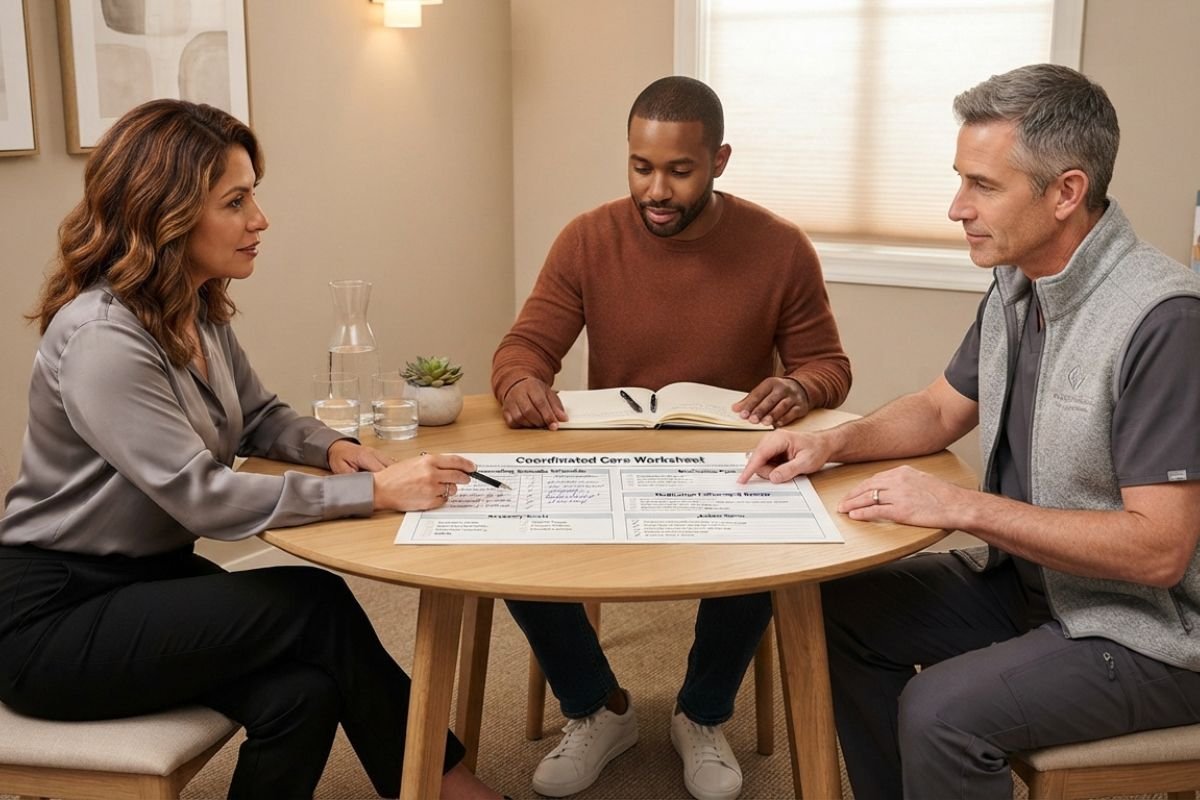
Is Counseling Required to Receive Buprenorphine or Suboxone?
For buprenorphine treatment, including medications such as Suboxone, federal guidance is clear.
SAMHSA states that a clinician's capacity to provide or refer someone to counseling is strongly recommended as evidence-based practice, but it is not required.
If counseling is unavailable or the patient does not wish to participate, that should not prevent the clinician from prescribing buprenorphine. SAMHSA
FDA also advises clinicians not to impose treatment-engagement conditions that delay or prevent MOUD. Medication should still be available when counseling is not immediately accessible. U.S. Food and Drug Administration
Readers can learn more in our buprenorphine treatment guide or Suboxone treatment guide.
Is Counseling Required at a Methadone Clinic or OTP?
Federally certified Opioid Treatment Programs operate under more specific rules.
The revised 42 CFR Part 8 requires OTPs to provide clinically appropriate, trauma-informed, and culturally responsive substance-use counseling tailored to the patient's needs, values, and wishes. SAMHSA
However, that does not mean every patient must attend a fixed number of counseling sessions before receiving methadone or another OUD medication.
SAMHSA states directly that if a patient does not wish to participate in counseling, the refusal does not preclude that person from receiving MOUD. SAMHSA
The current patient-facing rule summary says the same thing: counseling is recommended, but people cannot be denied OTP services simply because they choose not to participate. SAMHSA
For more information, see what an Opioid Treatment Program is.
Does Medication Work Without Intensive Counseling?
Medication Benefit Does Not Depend on Intensive Therapy for Every Patient.Yes, medication can still provide meaningful benefit even when intensive counseling is unavailable.
CDC's review of OUD treatment research notes that some studies found behavioral therapy plus medication can improve outcomes. However, another major buprenorphine study found that standard medical management plus buprenorphine performed similarly to buprenorphine plus much more intensive drug counseling. Counseling alone did not produce the same protection against return to opioid use. CDC
That does not prove counseling is unnecessary.
It shows why current recommendations favor an individualized model: provide medication, assess behavioral and social needs, offer counseling or referral, and increase support when the person needs or wants it.
Medication should not be delayed simply because a therapist is unavailable.
When Can Counseling Be Especially Helpful?
Counseling may be particularly useful when opioid use disorder occurs alongside other needs that medication alone does not directly address.
For example, someone may need help with depression, anxiety, trauma, grief, family conflict, housing instability, employment, stress, or patterns that repeatedly contribute to opioid use.
SAMHSA notes that many people with OUD have behavioral-health needs and that counseling, case management, and peer support may be very helpful as part of a whole-person treatment plan. SAMHSA
Mental Health
Depression, anxiety, and other behavioral-health needs.
Trauma
Support for trauma-related symptoms and recovery.
Relationships
Family conflict, communication, and support systems.
Triggers & Coping
Building strategies for stress, cravings, and high-risk situations.
Practical Recovery Needs
Housing, employment, case management, and peer support.
The intensity can vary. Some people may benefit from weekly individual therapy. Others may prefer occasional counseling, peer support, case management, or a combination of services.
The goal should be to match services to the individual rather than automatically prescribing the same therapy schedule to everyone.

What Types of Counseling Can Be Used With MAT?
Individual Counseling
Private sessions can address personal triggers, relationships, mental health, coping strategies, treatment goals, and other concerns.
Group Counseling
Group sessions can provide recovery education, skills practice, and support from others working through similar challenges.
Cognitive Behavioral Approaches
SAMHSA's OTP guidance identifies cognitive-behavioral techniques among counseling approaches that may support recovery. SAMHSA
Motivational Interviewing
Motivational interviewing can help someone explore ambivalence about substance use or treatment without relying on confrontation. SAMHSA also identifies it as a commonly used approach in OTP care. SAMHSA
Counseling is only one type of support. Case management, peer-recovery services, medical care, psychiatric treatment, housing services, and family support may also be relevant.
What If Someone Does Not Want Counseling?
Declining counseling does not necessarily mean someone is refusing treatment.
A patient may not feel comfortable with therapy initially, may already receive counseling elsewhere, may have work or family scheduling barriers, or may simply want to stabilize on medication first.
Current guidance supports continuing the conversation over time rather than withholding medication.
SAMHSA's updated OTP rules emphasize shared decision-making, meaning the treatment plan should reflect the patient's goals and preferences while clinicians continue explaining available services. SAMHSA
Someone who initially declines counseling may decide later that additional support would be helpful.
Why Low-Barrier Medication Access Matters
Medication treatment is still underused.
SAMHSA's 2025 National Survey on Drug Use and Health estimated that about 4.0 million people aged 12 or older had opioid use disorder during the past year.
Only about 623,000 people with past-year OUD—15.7%—received medication for OUD during 2025. SAMHSA
That treatment gap is one reason federal agencies have focused on removing unnecessary barriers such as requiring patients to obtain multiple services before they can receive effective medication.
Can a MAT Clinic Still Require Counseling?
A specific program may have its own treatment structure, and state rules can also differ.
SAMHSA notes that federal changes such as elimination of the buprenorphine X-waiver do not override state laws, so clinicians and patients may encounter additional state-level requirements. SAMHSA
Some integrated programs also build counseling into their overall service model.
However, when evaluating a clinic, it is reasonable to ask whether counseling is being offered because it is clinically useful and individualized, or whether medication is being unnecessarily withheld until an arbitrary counseling requirement is met.
Readers can use our how to choose a MAT clinic guide when comparing providers.
How to Choose a Clinic That Offers Counseling and Medication
Ask the clinic:
Medication Access
Which medications do you provide?
Confirm whether the program offers methadone, buprenorphine, naltrexone, or other treatment relevant to your needs.
Counseling Options
Is counseling available onsite or by referral?
Either model can work, but coordination matters.
Individualized Plan
Is counseling individualized?
Current OTP standards emphasize treatment based on patient needs and goals rather than a rigid one-size-fits-all schedule. SAMHSA
Mental Health Care
Can mental-health services be coordinated?
Someone with depression, anxiety, PTSD, or another condition may benefit from additional behavioral-health treatment.
Scheduling
Will medication continue if I decline counseling?
Ask this specifically if it affects your ability to access care.
Start with the MAT clinic directory to explore provider options.

Frequently Asked Questions About MAT and Counseling
Is counseling mandatory for MAT?
Not universally. Counseling should be offered and can be helpful, but current federal guidance says OUD medication generally should not be withheld simply because counseling is unavailable or declined. U.S. Food and Drug Administration
Do I need counseling to get Suboxone?
There is no federal requirement that a patient participate in counseling before receiving buprenorphine. SAMHSA says counseling or referral capacity is recommended, but inability or refusal should not prevent prescribing. SAMHSA
Is counseling required for methadone?
OTPs must make appropriate counseling available, but under current federal rules a patient who declines counseling can still receive MOUD. SAMHSA
Can medication work without therapy?
Medication itself is an evidence-based OUD treatment. Some people benefit significantly from additional behavioral services, but intensive counseling is not required for medication to have therapeutic value. CDC
What counseling is used with MAT?
Depending on the program and patient, services may include individual counseling, group treatment, motivational interviewing, cognitive-behavioral approaches, family services, case management, or peer support.
Can I see my own therapist while getting MAT somewhere else?
Often, yes. Many medication providers coordinate with outside behavioral-health clinicians rather than requiring all services to occur in the same facility. Policies vary by provider.
Can a clinic refuse medication because I missed counseling?
Federal guidance for buprenorphine and OTP care discourages making medication access contingent on counseling participation. Individual circumstances, state requirements, and program rules can vary, so ask the provider directly about its policy. SAMHSA
Do people with mental-health conditions need counseling during MAT?
They may benefit from mental-health treatment, but services should be based on individual clinical needs rather than automatically applied to everyone.
Find MAT With the Support You Need
MAT does not have to mean choosing between medication or counseling.
Medication can directly treat opioid use disorder, while counseling and other supports can address additional behavioral, emotional, social, and recovery needs when they are useful.
The goal should be an individualized treatment plan without unnecessary barriers to evidence-based medication.
Important Safety Information
This page provides general educational information about medication treatment and counseling for opioid use disorder. It is not an individualized treatment recommendation.
Do not start, stop, or change methadone, buprenorphine, naltrexone, or another medication based solely on information from this page.